
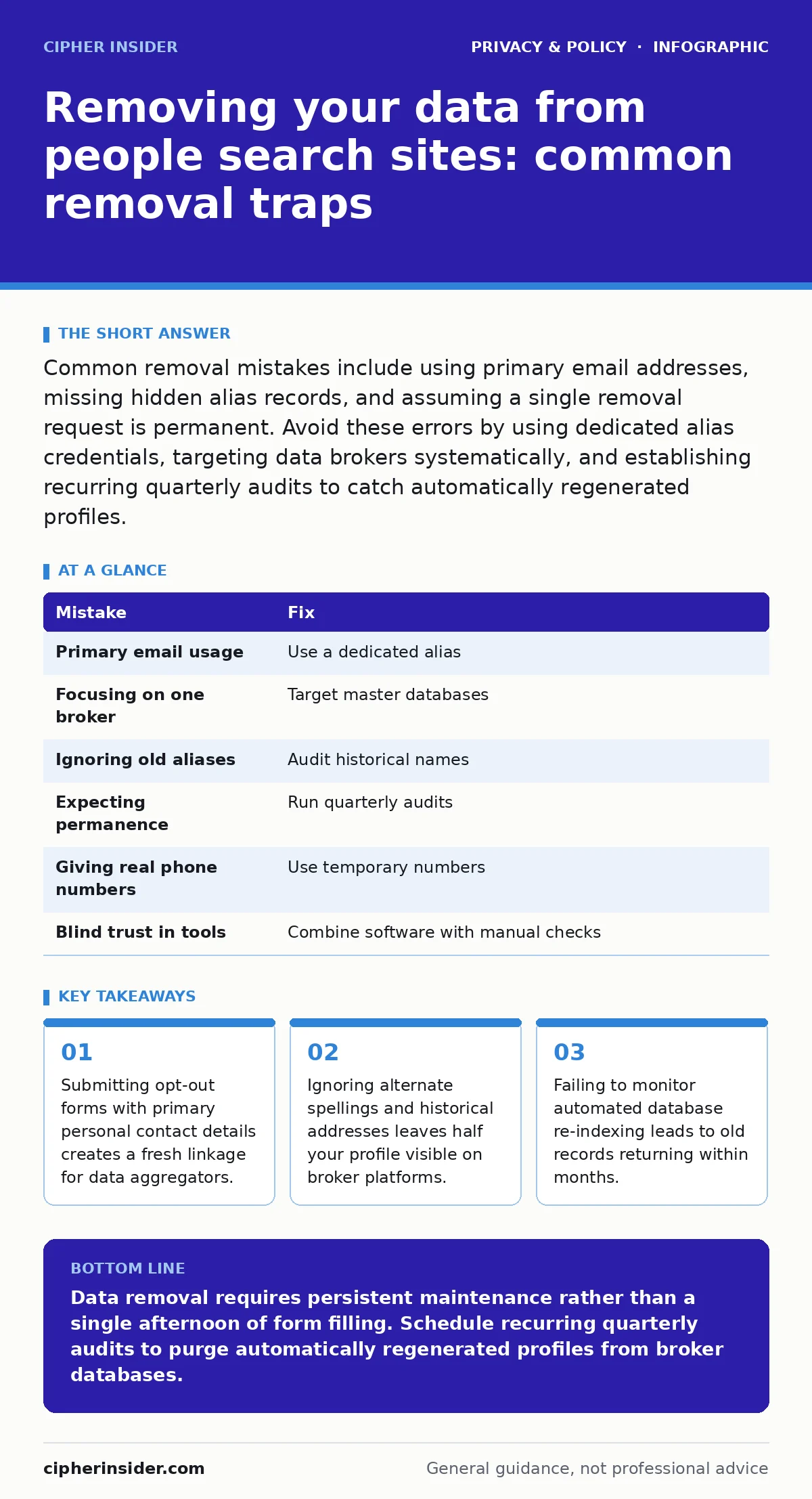
Common removal mistakes include using primary email addresses, missing hidden alias records, and assuming a single removal request is permanent. Avoid these errors by using dedicated alias credentials, targeting data brokers systematically, and establishing recurring quarterly audits to catch automatically regenerated profiles.
Mistake 1: Using your primary email address for opt out requests
Why it hurts: Data brokers harvest the contact details you provide during opt-out submissions and link them directly to your identity profile. Using your daily inbox address gives the aggregator a fresh data point to reconnect your severed records.
The fix: Create a dedicated, disposable alias email address exclusively for handling removal requests. Direct all broker correspondence to this isolated inbox so harvesting algorithms cannot tie the opt-out communication back to your main digital footprint.
Mistake 2: Stopping after removing records from the largest single broker
Why it hurts: Hundreds of smaller subsidiary databases scrape information from a handful of master aggregators. Clearing your name from one prominent site leaves your complete dossier intact across dozens of obscure downstream mirrors that continuously feed each other.
The fix: Target the foundational master databases first, because upstream removals starve the downstream mirrors of fresh source material. Map out the parent companies that supply raw records to smaller platforms instead of chasing every single mirrored copy manually.
Mistake 3: Forgetting to check historical maiden names and misspelled aliases
Why it hurts: Automated scraping tools collect typographical errors, old postal addresses, and previous legal names from public municipal filings. If you only search for your current legal name and exact address, half your exposed footprint remains hidden in plain sight.
The fix: Compile a comprehensive inventory of every past address, former surname, and common misspelling associated with your history. Run separate removal requests for every single variation to ensure data brokers cannot bridge your identity back together using historical clues.
Mistake 4: Assuming a successful removal request is permanent
Why it hurts: Public registries, property deeds, and court records update continuously, providing a steady stream of fresh data for scrapers. Data brokers regularly re-index these public sources, meaning your profile will automatically regenerate a few months after a successful opt-out.
The fix: Establish a recurring calendar reminder to audit major broker sites every 3 months. Treat data removal as an ongoing maintenance task rather than a one-time chore, much like managing your browser fingerprinting defenses against persistent trackers.
Mistake 5: Providing a real phone number for verification SMS
Why it hurts: Many broker opt-out systems demand a telephone number to send a verification code before processing your request. Handing over your active mobile number gives the platform a verified communication channel and a high-value identifier to index.
The fix: Utilize a prepaid burner phone number or a Voice over IP service specifically configured for receiving text verifications. Discard the temporary number immediately after the removal confirmation arrives so the broker cannot retain your active voice contact.
See also: Differential Privacy Meaning: How Noise Protects Your Data · Data Subject Rights Request: How to Process and Respond Correctly
Mistake 6: Trusting automated paid removal services to catch everything
Why it hurts: Commercial removal software relies on predefined scripts and static database lists that often miss newly launched broker domains. Paying a third-party service creates a false sense of security while leaving your records exposed on newly emerged scraping operations.
The fix: Combine automated monitoring with manual spot-checks using specific search operators on public engines. Understanding how ad tracking networks operate helps you recognize how hidden data brokers quietly track and reconstitute your personal profile across the web.
| Mistake | Fix |
|---|---|
| Primary email usage | Use a dedicated alias |
| Focusing on one broker | Target master databases |
| Ignoring old aliases | Audit historical names |
| Expecting permanence | Run quarterly audits |
| Giving real phone numbers | Use temporary numbers |
| Blind trust in tools | Combine software with manual checks |
Key takeaways
- Submitting opt-out forms with primary personal contact details creates a fresh linkage for data aggregators.
- Ignoring alternate spellings and historical addresses leaves half your profile visible on broker platforms.
- Failing to monitor automated database re-indexing leads to old records returning within months.
Data removal requires persistent maintenance rather than a single afternoon of form filling. Schedule recurring quarterly audits to purge automatically regenerated profiles from broker databases.
Frequently asked questions
How long does it take for data brokers to remove your information after a request?
Most jurisdictions and broker policies require processing within 2 weeks, but stubborn platforms can take up to a month to clear cached records.
Can data brokers legally ignore my removal request?
Depending on your local jurisdiction and privacy regulations, some commercial data aggregators claim exemptions based on public record laws.
Why do my records keep reappearing after I successfully deleted them?
Scraping algorithms continuously ingest newly published public records, court filings, and utility registries, automatically rebuilding your profile from scratch.
Should I use a lawyer to force data brokers to comply?
Legal representation is rarely necessary unless a broker refuses to honor statutory removal obligations under applicable regional privacy frameworks.
How this guide was produced: written by the Cipher Insider editorial team with AI assistance, checked against the public references listed below, and reviewed when the facts change. See our editorial policy or report an error.