
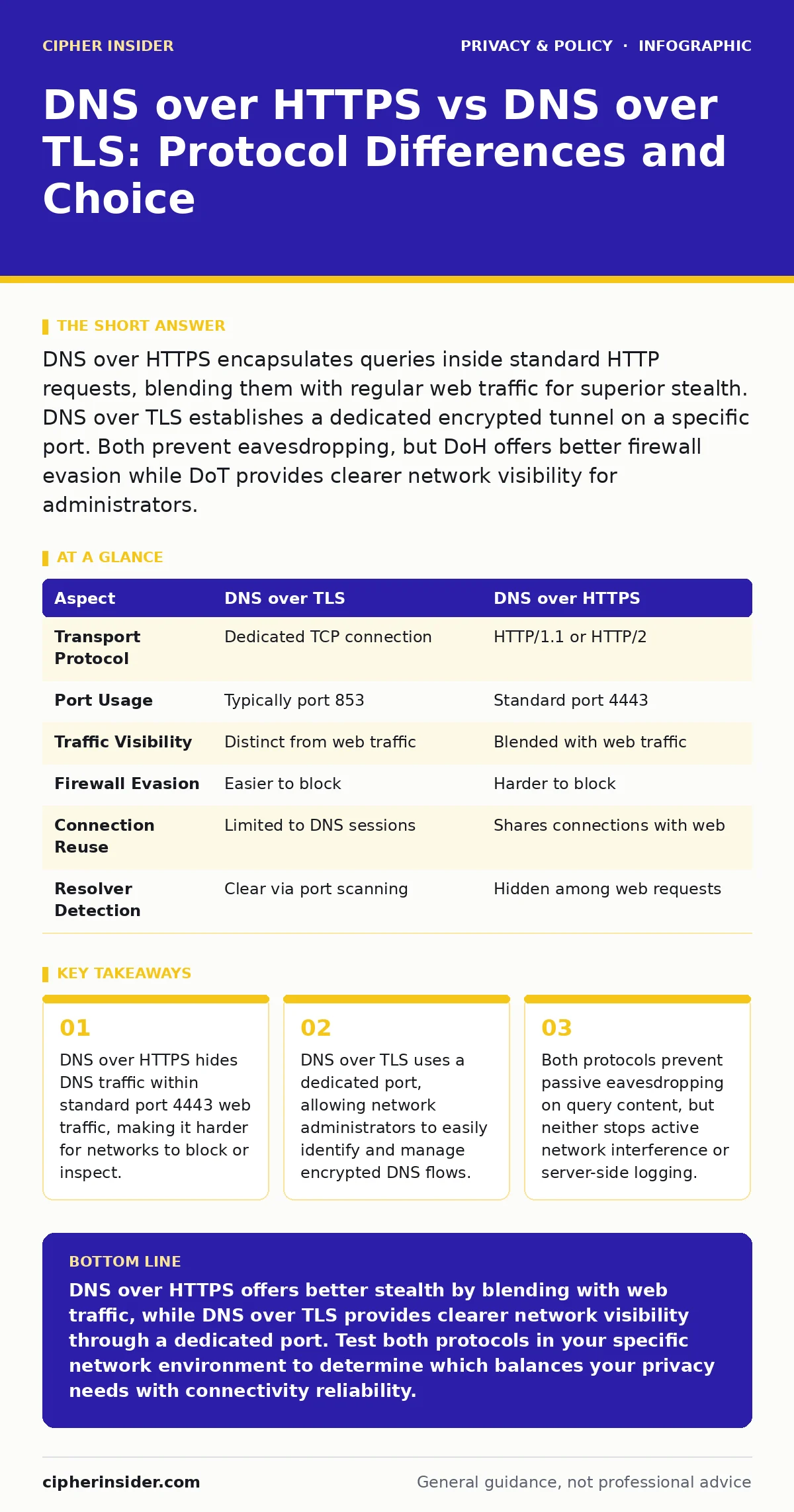
DNS over HTTPS encapsulates queries inside standard HTTP requests, blending them with regular web traffic for superior stealth. DNS over TLS establishes a dedicated encrypted tunnel on a specific port. Both prevent eavesdropping, but DoH offers better firewall evasion while DoT provides clearer network visibility for administrators.
The Core Distinction Between the Protocols
DNS over HTTPS and DNS over TLS both encrypt your domain name queries to prevent third parties from reading them. The fundamental difference lies in how they transport that encrypted data. DNS over TLS creates a separate, dedicated encrypted connection specifically for DNS, typically on port 853. DNS over HTTPS wraps DNS queries inside standard HTTP requests, sending them over the same port 4443 used for secure web browsing. This architectural choice dictates how each protocol behaves in restricted networks and how easily it can be detected by network monitoring tools.
What Is DNS over TLS?
DNS over TLS establishes a direct, encrypted channel between your device and the DNS resolver. It operates similarly to standard HTTPS but is dedicated solely to DNS traffic. By using a specific port, it allows network equipment to distinguish DNS traffic from other encrypted data. This separation helps administrators apply specific policies to DNS lookups. However, because the port is distinct, firewalls can easily identify and block it if an organisation wishes to prevent encrypted DNS usage. The protocol relies on standard TLS handshake procedures to verify the identity of the resolver before transmitting any query data.
What Is DNS over HTTPS?
DNS over HTTPS encapsulates DNS queries within standard HTTP POST or GET requests. This means your DNS traffic looks identical to any other secure web request, such as loading a webpage or sending an email. It travels over port 4443, the standard port for HTTPS web traffic. This blending makes it extremely difficult for network intermediaries to distinguish DNS traffic from general web browsing. Consequently, it is harder to block without disrupting all web access. The trade-off is that this method can mask legitimate DNS issues, making troubleshooting more complex for network engineers who rely on visibility into specific service types.
Point-by-Point Comparison of Features
| Aspect | DNS over TLS | DNS over HTTPS |
|---|---|---|
| Transport Protocol | Dedicated TCP connection | HTTP/1.1 or HTTP/2 |
| Port Usage | Typically port 853 | Standard port 4443 |
| Traffic Visibility | Distinct from web traffic | Blended with web traffic |
| Firewall Evasion | Easier to block | Harder to block |
| Connection Reuse | Limited to DNS sessions | Shares connections with web |
| Resolver Detection | Clear via port scanning | Hidden among web requests |
When to Choose DNS over TLS
Choose DNS over TLS when network visibility is a priority for your environment. This protocol allows administrators to monitor DNS traffic volume and destination without decrypting the content. It is suitable for corporate networks where policy enforcement requires clear separation of services. If your organisation uses strict firewall rules that allow specific ports, DNS over TLS integrates cleanly with existing infrastructure. It also simplifies troubleshooting because DNS errors do not get lost in the noise of general web traffic failures.
- Use in environments requiring clear service separation
- Select when firewall rules rely on port-based filtering
- Choose for easier network diagnostics and error tracking
See also: Smart home privacy risks: recovery steps after a sensor leak · App permission management best practices for strict device privacy
When to Choose DNS over HTTPS
Choose DNS over HTTPS when privacy and evasion of censorship are your primary concerns. Because it mimics standard web traffic, it bypasses most basic firewalls that block non-standard ports. This is valuable in public Wi-Fi networks or regions with restrictive internet policies. It also benefits from HTTP/2 multiplexing, allowing multiple DNS queries to share a single connection with other web requests, potentially reducing latency. However, be aware that this blending can complicate security monitoring, as malicious DNS activity looks like normal browsing.
- Use in restrictive networks blocking non-standard ports
- Select for maximum privacy against passive network inspection
- Choose when leveraging HTTP/2 connection reuse benefits
Overlapping Considerations and Limitations
Both protocols protect against passive eavesdropping, ensuring that neighbours or ISPs cannot see which domains you visit. They do not, however, prevent the DNS resolver itself from logging your queries. Privacy depends entirely on the trustworthiness of the resolver provider. Neither protocol protects against active network interference, such as man-in-the-middle attacks if certificate validation is bypassed. Users must ensure their devices validate certificates correctly to maintain security. These measures complement other privacy strategies, such as managing consent for online tracking and understanding the risks of ad tracking.
Implementation and Troubleshooting Nuances
Implementing these protocols requires configuring your operating system or router to use a specific resolver. Most modern devices support both, but configuration methods vary. Troubleshooting DNS over HTTPS can be challenging because standard network diagnostic tools may not parse HTTP-encapsulated DNS correctly. If you experience connectivity issues, temporarily switching to standard DNS can help isolate whether the problem is with the encryption layer or the underlying network. Understanding these mechanics helps you make informed choices about your digital privacy, similar to how you might evaluate mobile app permission abuse or parental controls.
Key takeaways
- DNS over HTTPS hides DNS traffic within standard port 4443 web traffic, making it harder for networks to block or inspect.
- DNS over TLS uses a dedicated port, allowing network administrators to easily identify and manage encrypted DNS flows.
- Both protocols prevent passive eavesdropping on query content, but neither stops active network interference or server-side logging.
DNS over HTTPS offers better stealth by blending with web traffic, while DNS over TLS provides clearer network visibility through a dedicated port. Test both protocols in your specific network environment to determine which balances your privacy needs with connectivity reliability.
Frequently asked questions
Does DNS over HTTPS hide my browsing history from my ISP?
It hides which domains you query from your ISP, but it does not hide the specific pages you visit or the content you download, as that travels over separate connections.
Can DNS over TLS be blocked by a firewall?
Yes, because it uses a distinct port, typically 853, firewalls can easily identify and block traffic on that port without affecting other web services.
Is DNS over HTTPS faster than standard DNS?
Speed varies, but HTTP/2 multiplexing in DNS over HTTPS can reduce latency by sharing connections with web traffic, whereas standard DNS often opens new connections per query.
Do I need to install special software to use these protocols?
No, most modern operating systems and browsers have built-in support for both DNS over TLS and DNS over HTTPS, requiring only configuration changes.
How this guide was produced: written by the Cipher Insider editorial team with AI assistance, checked against the public references listed below, and reviewed when the facts change. See our editorial policy or report an error.